The Emerald City

Any time I see Martin Clunes, I immediately think of Emmerdale. It could be his teeth, or his hair, both shockingly ordinary. Or his eyes, animated in that gooey way of someone who must perform the lives of others on camera. Really, though, it's his head. Martin Clunes's head tells my brain: "I am the stalwart of the soap you have not seen."
It makes so much sense when I see him in "Wuthering Heights" declaring to the two children he incessantly drunkenly bullies: "I am the kindest man alive!" I am reminded of former Arsenal co-owner, David Dean, reminiscing about his first dinner with Arsène Wenger. "It was something in the stars I saw: 'Ar-sene for Ar-sen-al.' It's destiny. It's gonna happen one day." Thirty years later, those sly galactic forces were at it again. Emerald for Emmerdale. Clunes for Earnshaw. Of course. Of course.
You can imagine what a gut-punch it was to leave the cinema and discover that not only has Martin Clunes, who is excellent here, never even appeared in Emmerdale, he has never acted in a British soap. He just reminds me of ITV. I understand now. I'm ok.
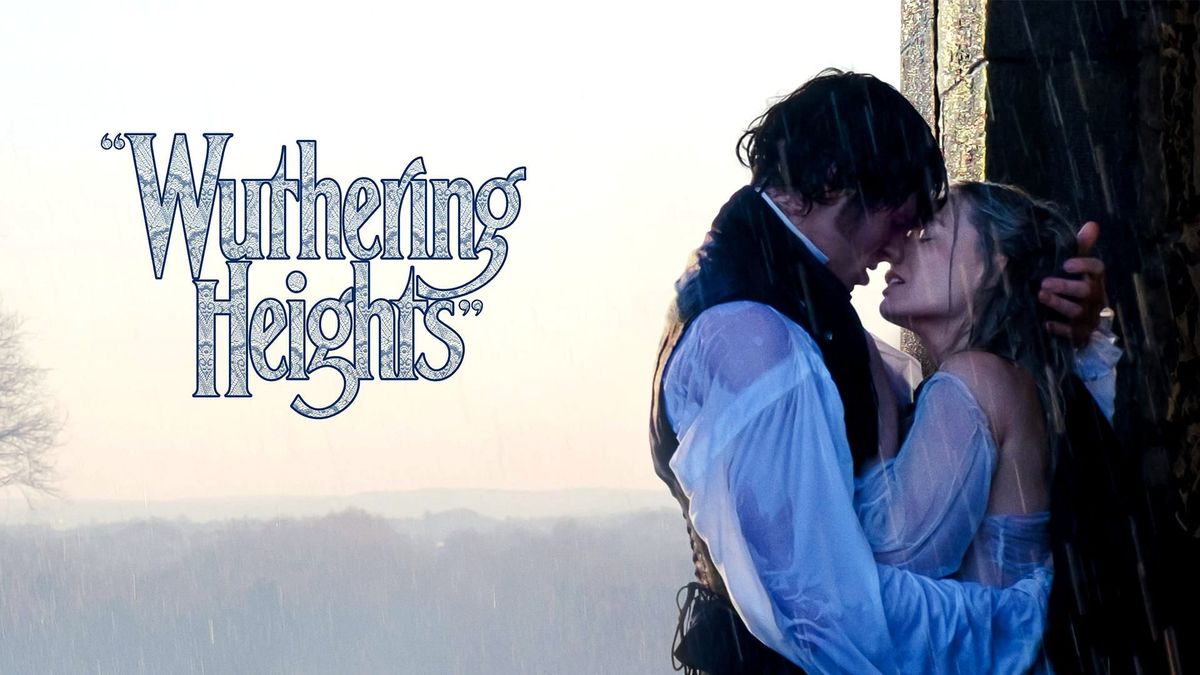
"Wuthering Heights" is more accurately Emerald for emmer, this maladaptive adaptation not so much accompanied by but drenched in the sound of Charli XCX, with Cathy (Margot Robbie) and Heathcliff (Jacob Elordi) as Rich Brat and Poor Brat respectively. This is a film about two children who, living in horrifically isolated and insular spaces, never grow up. The modern music overtly gestures to this overgrown childhood and inaccessible adulthood, its abrasive and discordant shades closer in affinity to the austere alleyways that surround nightclubs than to the dancefloors within.
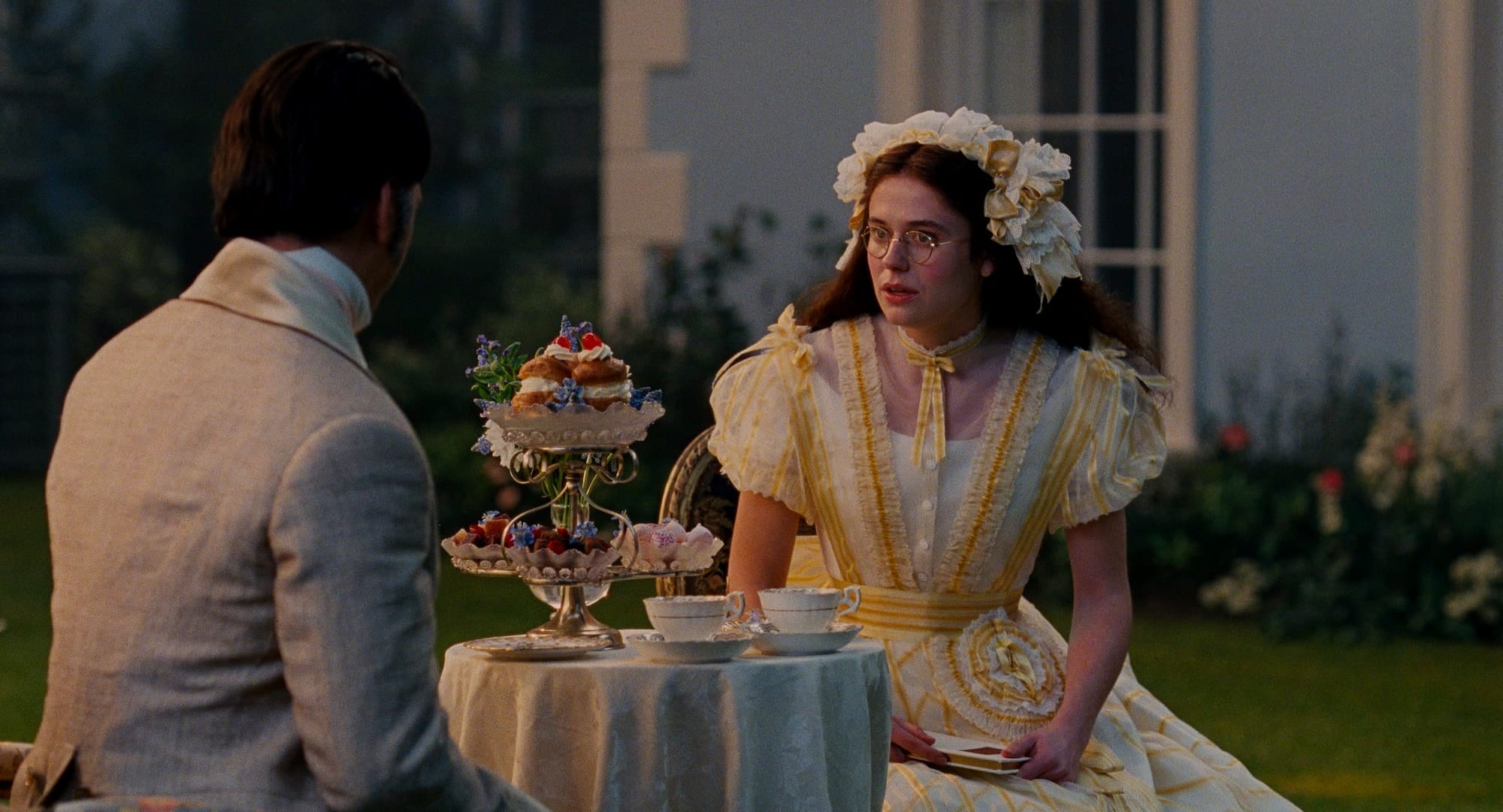
Heathcliff has a chance to mature when he disappears in anger to forget about his all-consuming love for Cathy. He fails to manage that, instead mysteriously becoming wealthy and pointedly getting a haircut so that she might not think of him as vermin upon his return. Cathy's opportunity is, oddly, more difficult, as her marriage to Empty Richman Edgar Linton (Shazad Latif, who is given almost nothing to do except, I guess, Margot Robbie) resembles living in a dollhouse down the road from your rural childhood home. I'm still sad we didn't get to see the room of ribbons.
Speaking of tying things together, I was blown away by Alison Oliver's eccentric performance as Isabella Linton (a friend misnamed Oliver as Alison O'Connor when I praised her acting, not so much a Freudian slip as a Fenian one, so desperate were they to confirm her Irishness.) Isabella is Sister Brat. Her hunger for drama and dramatics sees her evolve from decorating dollhouses to donning dog collars. She's the comedic current unfailingly shadowing the main electricity supply between the two protagonists when it wobbles.
The initial sparks begin when young Cathy (a fantastic Charlotte Mellington in her screen debut) and young Heathcliff (Owen Cooper) are united in the same household at the onset of their teenage years. The intensity of their connection in this stage of their lives is sweet, and the unpredictable violence that haunts their evenings thanks to Mr Earnshaw's moods goes some way to explaining the depth of their feelings for each other acquiring mortal significance.
Upon arriving, Margot Robbie takes over the screen, as is her wont. She is clearly one of the best leading actresses of her generation, and is endlessly captivating throughout yet again. I do wonder whether her successful attempt to be a Hollywood Renaissance Woman (perhaps the wealthiest actor-producer this decade?), while vastly impressive, is diluting her movie star qualities. At a minimum, it's clouding the acting choices she's making in her 30s but, amazingly, she is only 35. I'm far from worried.
Elordi's Heathcliff is very believably betrothed to her Cathy, and there are some sincerely brilliant emblems of their love. Cathy, shivering in a bare, wintry room, insists no more wood be fetched for a fire as supplies are low. Heathcliff's ingenious response is to break the chair upon which he sits and burn its pieces for some warmth. As kids, a prank Cathy plays is to place eggs under Heathcliff's sheets, which he crushes as he sits down. This is reprised later when, after a sequence in which years pass and Cathy struggles to accept her life without Heathcliff, she sits on her own bed in her new house and the audience hears a familiar squelch of squashed shells. Fennell has taken a lot of stick for her on-the-nose metaphors, but this is a gorgeous, well-earned moment, whose implicit signalling of a grand return elicits genuine gasps.
Unfortunately, this moment is also a victim of a general flaw in the film: quiet moments becoming rushed as we gallop through the gauntlet of emotions. No sooner has Cathy pegged these eggs are we drowning in an overwrought ballad.
Fennell describing her approach to 'Wuthering Heights" as being driven by how she read Emily Brontë's novel at 14 is a double-edged sword. It can be used to convincingly jab at those who dismiss the degree to which Fennell has strayed from the novel's narrative, its tone, its core. Her film is so well realised that it deserves to be taken on its own merits, and it's important for art and entertainment to be made from a young person's perspective.
However, it cannot simultaneously act as a get-out-of-jail-free card for the storytelling to be so broad and, at times, pedestrian. We do not need to infantilise the teenage viewpoint. There is some emptiness in the writing too, such as the complete disinterest in exploring wealth and class. Just because the characters don't have a nuanced grasp on these things doesn't mean the script can't.
Ultimately, though, Fennell gets the balance right. The true, purposeful emptiness is witnessed in the sex scenes between Cathy and Heathcliff. The attraction and physical need for each other is real, but at the end of an insatiable sequence of secret romping, Cathy finally realises there's something fundamental out of step in her life. She cannot continue, with the sex or with living. It's an awful conclusion for her, one the result of a muddled, confused, sequestered existence. Though it does tally with something that seemed evident from the word go in this film: these two don't know what romantic love is. They have not had the chance to learn. They're just horny and, more than anything, alone.